Menu Engineering With Actual Contribution Margin Data
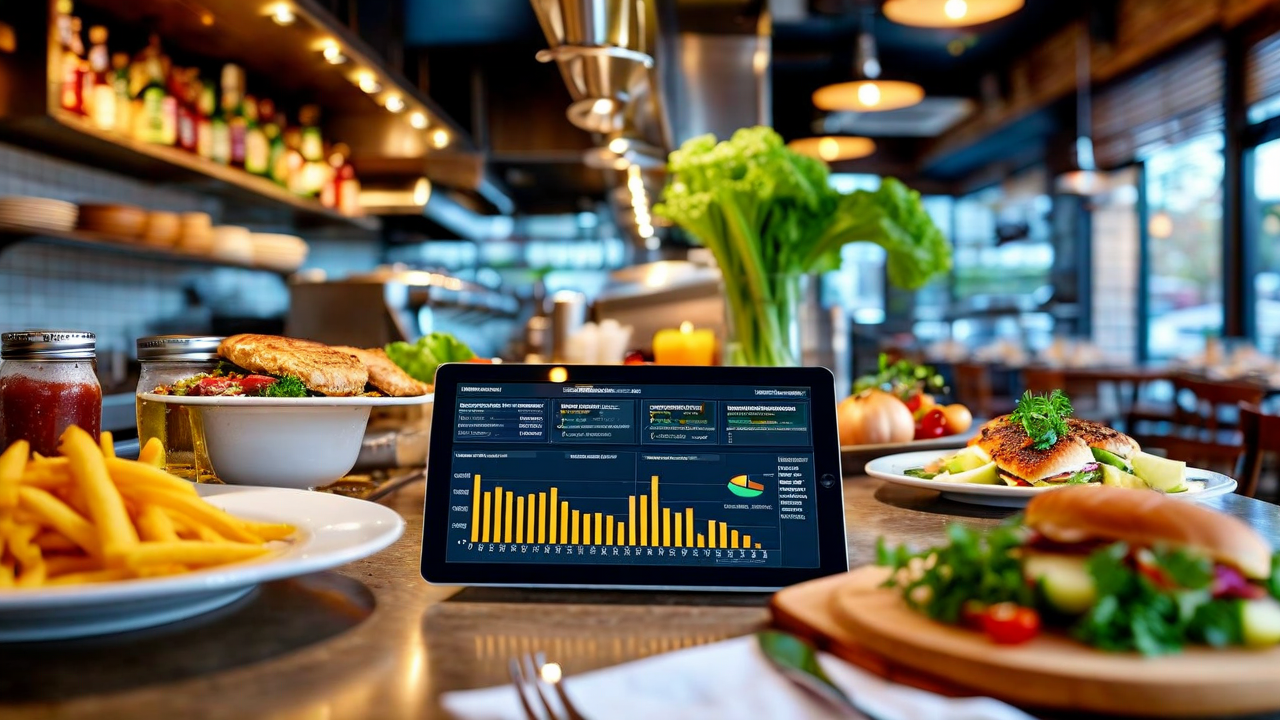
Menu engineering has been a restaurant management concept since the 1980s. Most operators have heard of the four quadrants - stars, plowhorses, puzzles, dogs - based on popularity versus profitability. The idea is right. The execution in most restaurants is built on the wrong inputs.
The typical approach uses food cost percentage to proxy profitability. High-selling, low-cost-percentage items are "stars." The problem with this method is that food cost percentage doesn't tell you how much money an item actually contributes. It tells you what percentage of the selling price went to ingredients. Those are related but not the same thing - and when you're making menu decisions, contribution margin in dollars is what matters.
Contribution Margin vs. Food Cost Percentage
A concrete example. Your ribeye steak sells for $48 and has a food cost of $18.50, giving a food cost percentage of 38.5%. Your pasta primavera sells for $22 and has a food cost of $5.20, giving a food cost percentage of 23.6%.
By food cost percentage, the pasta is the better-performing item. But the ribeye contributes $29.50 to covering your labor, occupancy, and profit. The pasta contributes $16.80. If you're trying to maximize the dollars flowing from your kitchen to your bottom line, the ribeye is the better item - by $12.70 per cover - despite having a higher food cost percentage.
Menu engineering based on food cost percentage would tell you to push the pasta. Menu engineering based on contribution margin would tell you to push the ribeye. These produce opposite decisions, and the contribution margin approach is right for restaurants trying to maximize revenue per cover.
Building a Real Menu Matrix
To do this properly, you need two things for every menu item: accurate recipe costing and POS sales data by item. Recipe costing requires that every ingredient in every dish is priced at current actual cost - not theoretical cost from six months ago when you built the recipe, but what you're paying today. Food cost volatility means a recipe that had a $9.20 food cost in Q1 might have a $10.80 food cost in Q3 when your protein supplier raised prices.
Once you have actual contribution margin per item and actual sales volume per item, you can build the matrix properly:
- Stars: High volume, high contribution margin. These are your most important items. Protect their quality, maintain their placement, and make sure every server knows them well.
- Plowhorses: High volume, low contribution margin. These sell well but aren't making you money. Candidates for price increases, recipe cost reduction, or portion adjustment - done carefully, because their volume means the impact of getting it wrong is large.
- Puzzles: Low volume, high contribution margin. These don't sell enough but they're profitable when they do. Candidates for better menu placement, server training on suggestive selling, or reframing the item description to increase curiosity.
- Dogs: Low volume, low contribution margin. The honest call here is usually removal, but context matters - a dog in November might be a seasonal item that performs in summer. Check before cutting.
The Pricing Question Nobody Wants to Answer
Real menu engineering usually surfaces a few plowhorse items that are priced too low for their sales volume. This is where the analysis gets uncomfortable: a high-selling item that's barely contributing margin is probably either priced too low or has a food cost that's drifted up without a compensating price increase.
The instinct is to avoid raising prices on popular items - "people order it because it's a good value, and if we raise the price they'll stop." This concern is often overstated. Guests who like an item are more tolerant of price increases than you expect, particularly if the increase is modest and the item is positioned correctly on the menu. A $2-3 price increase on a plowhorse that sells 40 covers a night is $80-$120 per service in additional contribution margin. Over 250 dinner services a year, that's $20,000-$30,000 in additional contribution from one menu decision.
The key is doing this with data rather than intuition. If you know a specific item is selling 35 covers per service and contributing $9.40 each, and you raise the price by $2 and volume drops to 28 covers at $11.40 each, you've gone from $329 to $319.20 in nightly contribution from that item - roughly neutral. But if volume only drops to 32 covers, you're at $364.80 - better than before, with less kitchen throughput. The data lets you model the scenarios before you change the menu.
The Role of Recipe Costing Accuracy
Everything in menu engineering depends on accurate recipe costs. A recipe costed at 6-month-old ingredient prices might be off by 15-20% in a volatile commodity environment. That error flows directly into your contribution margin calculations and produces wrong category assignments.
The practical standard is quarterly recipe cost reviews, with immediate updates when any ingredient moves more than 10% in either direction. This sounds burdensome but isn't if your inventory system is tracking actual purchase costs - the updates can be automated or semi-automated rather than requiring manual entry every time your produce vendor raises prices.
Menu Engineering as a Quarterly Practice
The restaurants that get the most out of menu engineering treat it as a quarterly management meeting, not a one-time project. Every quarter, pull the matrix: has anything moved categories? Have any items drifted into plowhorse territory because ingredient costs increased but prices didn't follow? Are there any former dogs that have become puzzles because of seasonal demand?
Three to four hours of analysis per quarter, backed by accurate recipe costs and real sales data, consistently finds $15,000-$40,000 in menu optimization opportunity for a full-service restaurant doing $2-3 million in revenue. That's not a marketing exercise or a conceptual framework - it's an operational discipline with measurable financial output.
DineLoop ties recipe costs to live ingredient prices and POS sales data. Your menu matrix updates automatically as costs and volumes change.
Book a Demo