The Multi-Location Management Challenge Nobody Prepares You For
Opening a second location feels like a milestone. And it is. But the operators who've done it consistently describe it as less of a growth moment and more of a transformation in what the job actually is. Running two restaurants isn't twice as hard as running one. It's a different job entirely.
The challenges that emerge at two locations - and compound rapidly at three, four, and five - aren't primarily operational in the kitchen sense. They're organizational: communication, standards consistency, data visibility, and the fundamental problem of being physically unable to be in two places at once. None of these are taught in culinary school or in the kitchen of your first restaurant.
The Standards Drift Problem
When you run one restaurant, standards are maintained through your physical presence and direct observation. You see the pasta is cut too thick today. You notice the server didn't describe the specials. You catch the line cook plating the salad wrong and correct it in the moment. The feedback loop is immediate and continuous.
At two locations, you're physically present at each location roughly half as often. The feedback loop stretches. Issues that would have been caught and corrected the same day now persist for days or weeks before you see them. By the time you visit Location 2, the sous chef has been making that salad the wrong way for three shifts and the team thinks it's the new standard.
Standards drift is the slow erosion of the specific things that made your first restaurant work. It happens faster than most operators expect. Within 60-90 days of opening a second location with full owner attention on the new spot, I've seen first-location food cost creep 2-3 points, service speed slow, and portion sizes drift - all without any single dramatic failure, just gradual loosening of attention.
The solution requires codifying what was previously intuitive. If you're the standards, and you can't be everywhere, the standards need to exist in writing, with measurement, and with accountable managers at each location who are responsible for maintaining them. This is the first real management infrastructure investment most independent restaurateurs make - and many make it too late, after standards have already drifted.
The Data Visibility Gap
At one location, your P&L tells you how the restaurant is doing. At two or three locations, your P&L tells you how the group is doing, but not where the problems are. A combined food cost of 31% across three locations could mean all three are at 31%, or it could mean one location is at 27% and one is at 35% and they're averaging out. Those two situations require completely different responses.
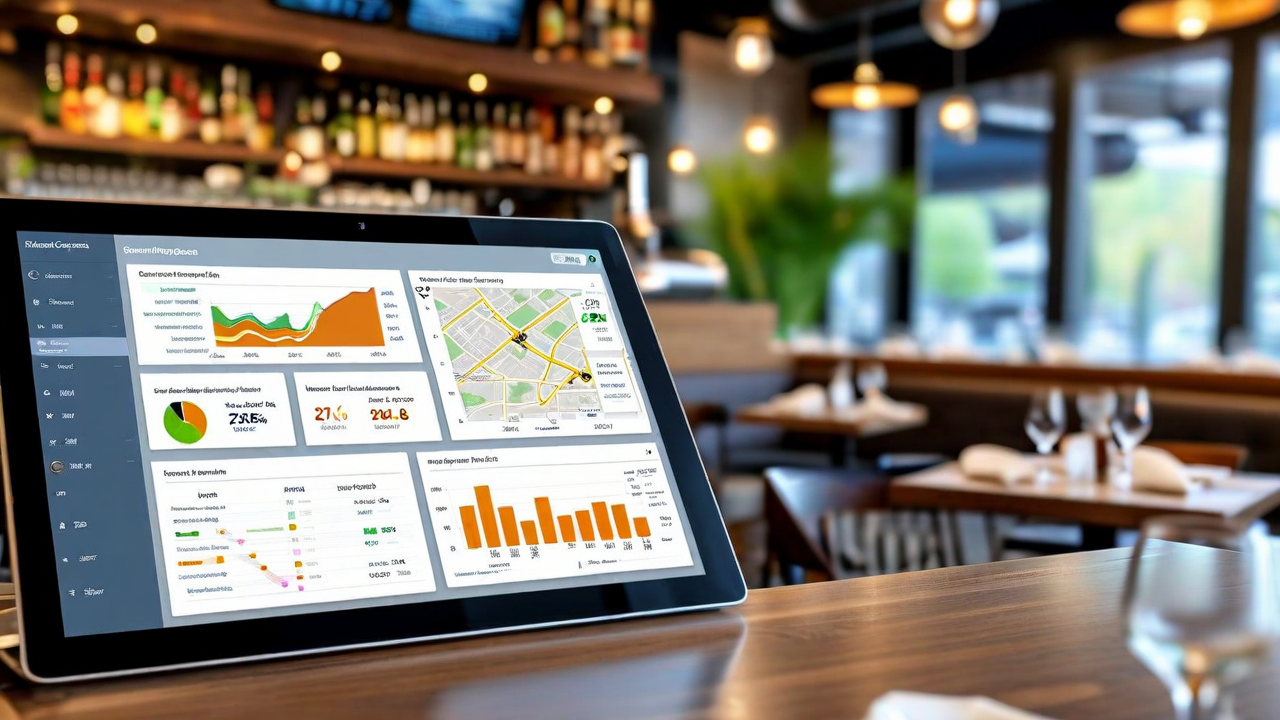
Multi-location operators need location-level reporting that runs on the same cadence as group-level reporting. Not monthly - weekly. If Location 3 runs a 34% food cost in week one, you want to know by Thursday, not when you close the month. The variance caught in week one is a correctable problem. The variance caught in month-end reporting has compounded for four weeks and may have established new kitchen habits that are harder to unwind.
The challenge is that most small operators' accounting and reporting infrastructure wasn't built for this. They're running QuickBooks for financials, separate POS systems at each location, and an Excel spreadsheet someone built two years ago to pull it together. Getting weekly, location-level cost data out of that infrastructure typically requires manual work that doesn't happen consistently.
The Manager Dependency Problem
Every additional location requires capable management you can trust to run it when you're not there. This is obvious in theory and extremely difficult in practice. The general manager who can run a restaurant at your standards - with enough judgment to make good decisions on the fly, enough discipline to hold the team to standards, and enough loyalty to the operation to care about outcomes rather than just showing up - is a rare person. You need one for every location.
Most multi-location operators are perpetually under-resourced on management. Either they have the right people but can't afford to pay them enough to keep them, or they promote from within faster than the skills develop, or they hire from outside and find the person who interviewed well doesn't translate to the floor.
The honest answer to this problem is that management development is a longer investment than most operators plan for. A kitchen manager promoted to GM needs 6-12 months of active mentorship before they can run a location independently at your standards. You can't compress that timeline by adding pressure. You can accelerate it somewhat with deliberate coaching, clear expectations, and regular structured feedback - but the timeline is mostly what it is.
The Purchasing Leverage You're Leaving on the Table
Multi-location operations have purchasing leverage that single-location restaurants don't. If you're buying proteins, produce, and dry goods across four locations, you're a meaningfully larger customer to your distributor than a single restaurant. Most operators don't negotiate this systematically. They keep the same vendor agreements they had at one location, simply placing larger orders.
A formal purchasing review at 3-4 locations - consolidated volume across locations, competitive bids from at least two distributors per category, documented pricing with 6-month review cycles - typically finds 3-8% cost savings on purchased goods. On a multi-location group doing $6M in annual food and beverage spend, the lower end of that range is $180,000 per year in cost reduction.
What the Successful Multi-Location Operators Do Differently
The groups that scale from 2 to 5 locations without losing quality or cost control share a few habits that operators who struggle tend to skip:
They build management infrastructure before they need it. The systems, reporting, training materials, and management meeting cadences are in place before Location 2 opens, not assembled in reaction to the problems that emerge after.
They measure everything at the location level, weekly, without exception. Revenue, covers, average check, food cost, labor cost, waste. Every location, every week. The group summary is useful; the location breakdown is what tells you what to do.
They invest in management compensation above market. Their GMs are paid well enough to stay, with clear growth paths, because they've calculated what turnover at the GM level costs in operational chaos and standards drift.
None of these are about technology. They're about organizational discipline. But good technology makes all of them easier to execute - particularly location-level visibility, which is essentially impossible to maintain manually across 4-5 locations without spending your entire management team's time on reporting.
DineLoop's cross-location dashboard shows every location's key metrics side by side, updated daily. Know what's happening before it becomes a problem.
Book a Demo